



We are asked many, many questions about the
diagnosis and treatment of pancreatic diseases in
the dog, specifically, those dealing with the
digestion and absorption of
nutrients. Such diseases are termed
pancreatic insufficiency, exocrine pancreatic
insufficiency, and
maldigestion syndrome.
The pancreas has many glandular functions, some
obvious and well known and others that are obscure
and not understood at all. We classically think of
the pancreas as the producer of insulin, and an
insufficient production of that hormone leading to
diabetes mellitus. For many dog owners,
diabetes is easy to understand since they can think
of it in terms of the disease seen in our fellow
humans. Many people, however, have difficulty
understanding diseases that affect the ability of
the organ to produce the various
enzymes that allow humans, dogs, and cats
to digest their food.
Function of the pancreas
Certain cells of the pancreas called 'acinar'
cells produce the important digestive enzymes
utilized by the dog's body. The function of the
enzymes is to break down food in the intestine into
smaller molecules. The major digestive enzymes are
protein molecules that are produced and stored in
the pancreas. They include trypsin, chymotrypsin,
amylase, and
lipase. The trypsin and chymotrypsin
break down protein molecules, the amylase breaks
down starches, and lipase does the same to fats and
triglycerides.
Breaking down the molecules of food into smaller
sizes is an important part of the overall digestive
process and allows nutrients to be absorbed by the
cells that line the intestine. The nutrients are
then passed from those cells into the bloodstream.
There they can be transported throughout the body
for use by the various
tissues. When a dog eats a meal it
stimulates the release of these enzymes. They flow
from the pancreas into the anterior small intestine
through a small tube called the pancreatic duct.
Only after they reach the lumen or center of the
intestine does their functional existence begin.
What is pancreatic
insufficiency?
The disease characterized by a decrease or
absence of these enzymes in the dog is referred to
as 'exocrine pancreatic insufficiency' or 'maldigestion
syndrome.' When dogs have this disorder, the
proteins, starches, and fats found in their diet
cannot be broken down into small enough pieces that
allow them to be absorbed through the intestinal
wall. The value and substance of the food,
therefore, stays in the
gastrointestinal tract and is passed out
in the feces undigested. The affected dog, without
treatment, literally starves to death even though it
may be constantly eating. It is estimated that 90%
of the pancreas must be destroyed before we see
symptoms of insufficiency.
What causes pancreatic
insufficiency?
There are several potential causes of pancreatic
insufficiency. Chronic pancreatitis (inflammation of
the pancreas) is a common cause of pancreatic
insufficiency. In some young animals (usually less
than two years of age), the cells of the pancreas
just start decreasing in number and functioning. The
cause for this is unknown, but it may be an
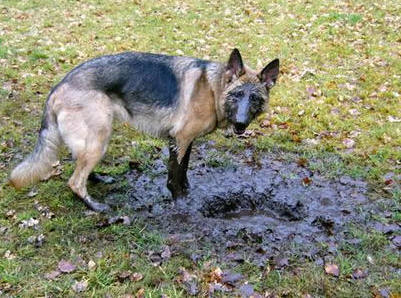
inherited condition. Many different dog
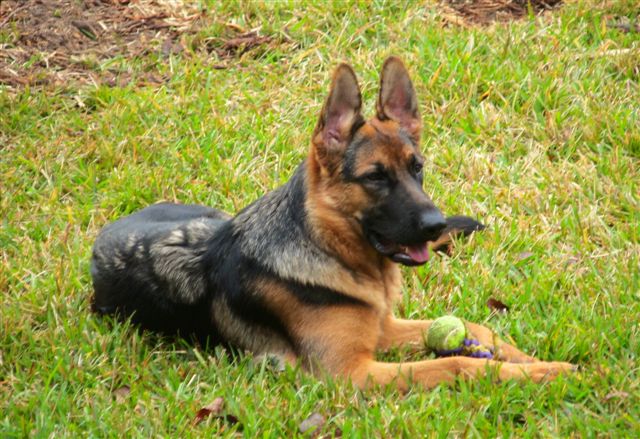
breeds can be affected, however, it is more common
in large breeds, especially German Shepherds.
Signs of pancreatic
insufficiency
Regardless of its cause, the signs associated
with exocrine pancreatic insufficiency are usually
obvious and fit a distinct pattern. The disorder may
come on gradually over a long period of time or it
may develop rapidly over a period of a week or two.
The animals with the condition show rapid weight
loss caused by loss of body fat, and muscle atrophy.
The hair coat has poor quality. There is usually
diarrhea with the stools being light yellow or
clay-colored, with the consistency of mashed
potatoes. In some cases, it may even be watery,
without any form at all. Depending on the diet,
there may be large quantities of undigested fat
present in the stool. The animal will seem
constantly hungry and eat as much food as it can
ingest at one time. It will often eat abnormal
things such as plants, dirt, or its own feces
(though pancreatic insufficiency is a rare cause of
stool eating in dogs). The animal, in its appearance
and behavior, typifies one that is starving to
death, and in reality, he is.
Diagnosis of pancreatic
insufficiency
In most cases, a presumptive diagnosis can be
made from clinical signs alone and it is then proven
by one of several available tests used to accurately
diagnose pancreatic insufficiency. These include:
- determining the levels of certain digestive
enzymes in the blood (serum
trypsin-like immunoreactivity), which is the
most reliable
- measuring the level of chymotrypsin activity
- determining the levels of digestive enzymes
in the stool (fecal proteolytic activity)
- examining the stool under the microscope
(least reliable)
Treatment of pancreatic
insufficiency
Fortunately, treatment can easily be accomplished.
Unfortunately, it is an expensive and lifelong
proposition. Treatment involves replacing the dog's
pancreatic enzymes with enzymes from other sources.
Our only source of medications for these cases is
products made through an expensive process, using
freeze-dried and ground-up extracts of hog and
cattle pancreases. These glands are harvested in
meat packing plants and then processed solely for
this purpose. They are formulated either into
tablets or powder and go under such trade names as
Viokase or Pancrezyme. They contain large quantities
of the same naturally occurring digestive enzymes
that are deficient in the affected pet. The tablets
are given prior to a meal while the powder is
usually mixed with food and allowed to set 30
minutes before feeding. Response to therapy is
immediate and the animal will usually return to near
normal health. Unfortunately, cost becomes the major
hurdle in treating pancreatic insufficiency. An
affected dog, for instance, will need $60-100 worth
of medication every month. Research is underway to
develop synthetic digestive enzymes, and hopefully,
will lower the price of treating these patients.
In some instances, raw pig pancreas can be used.
The pancreas needs to come from animals certified as
healthy by an approved meat inspector. Accurate
dosing is more difficult with the raw pancreas, but
in general, a 45-pound dog would need to receive 3
to 4 ounces of the chopped pancreas. The raw
pancreas can be frozen at -4ºF for up to 3 months
and still retain its enzyme activity.
If the dog does not respond well to the addition
of the digestive enzymes in Viokase or Pancrezyme,
the diet may sometimes need to be altered. A highly
digestible diet is fed, medium chain triglycerides
may be added as fat sources since they do not
require breakdown by pancreatic enzymes, and
multiple vitamin supplements are given (especially
Vitamin B12 (cobalamin) and the
fat-soluble vitamins A, D, E, and K.
Since the deficiency is one of enzymes and is
cured by the addition of the same enzymes back into
the diet, many dog owners regretfully try other
cures. There are many products, nutritional and
otherwise, that advertise they contain natural
enzymes which aid in digestion. Examples of these
are K-ZYME, ProBalance, Prozyme, and so on. These
really do contain real and natural enzymes and in
normal dogs can be very useful nutritional
supplements. However, they are not the enzymes
associated with Pancreatic Insufficiency. This is a
very specific disorder with specific enzymes needed
to correct it. The general nutritional supplement
will do no harm, but regretfully, they will do no
good either.
We occasionally see patients in which the
pancreatic insufficiency is only temporary and
somehow resolves itself in 6 to 8 months, but these
are rare exceptions. In these cases, it is thought
that the cells responsible for the production of the
enzymes have been irritated in some way but not
permanently damaged. When they recover from the
incident, whatever it was, their ability to produce
these enzymes returns