



German Shepherds                                                                                                German Shepherd Puppies


COURAGE - CHARACTER - COMMITMENT
Germany’s Finest in America
We are located North of Dallas, Texas
214-287-8080
HausMerkel@Yahoo.com

Last updated - Friday, January 29, 2010 09:34:50 PM -0500

HAUS MERKEL BLOG

Home
About Us

German Shepherd Puppies for Sale •

Older Puppies for Sale •


Our German Shepherd Males

Our German Shepherd Females •
Males for Sale

Females for Sale

Our German Shepherd Stud Dogs
Breeding Requirements for Stud

German Shepherd Rescues •
Memorials
Articles
OFA  •
Classifieds
 
More Links:
 
HEALTH ARTICLES:
MORE ARTICLES:
Other Links
Links
Contact
Add your Link
 
Members of           
GSDCA

WDA

Schutzhund USA

SV-Germany
 

The Importance of Puppy Socialization
From the very start, a puppy learns important lessons through his experience of the world around him. Even in the first few weeks as he snuggles with his dam, wrestles with his littermates, and is handled by his breeder each day, the personality traits and social skills that he will have all his life are beginning to form.

As the weeks go by, exposure to a variety of experiences is crucial to his becoming a well-rounded adult. Studies have shown that a puppy's experiences in the first three months of life strongly influence what kind of companion he will grow to be and how he will react to the world. Will he shy away from children? Will he be afraid of people in hats? Will he be aggressive toward other dogs? Or will he be easygoing and adaptable in a variety of situations?
READ MORE...

"The man who rears a dog must complete what the breeder began..." Max v. Stephanitz; Father of the German Shepherd Dog

        Dealing Dogs Documentary
An animal rights outfit, Last Chance for Animals, outraged that 42,000 dogs are sold to vet schools and research labs by vile kennel keepers, sets out on one of the most notorious: Martin Creek Kennel in Arkansas. It sent in investigator "Pete" with a hidden camera for six months. He worked for the owners and collected his sickening images
and commentated on the atrocities as he went.  Many of the dogs that ended up at this kennel had been stolen from their
backyards and sold.


"Fun at the Beach"

"Fun at Work"

"Fun just hanging out"


How to Protect your Pet from Heat Stroke


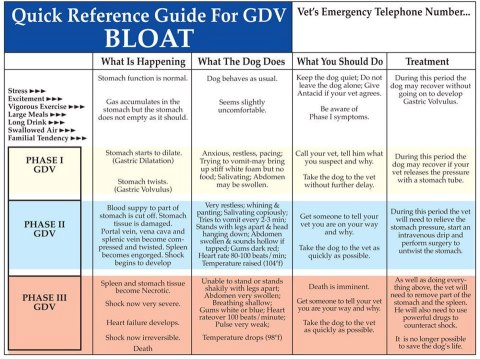
BLOAT


This is a real combination of symptoms that spells out EMERGENCY. These are the classic symptoms of a condition referred to as "bloat" - a dog that is pacing, restless and has unproductive attempts to vomit.

This is a common problem in large breed deep-chested dogs but can also occur in smaller dogs.

Basically what happens is this - the stomach twists causing the blood supply to the stomach to be compromised then leads to tissue death. As tissues are damaged, toxins are released and a sequence of events occurs that if left untreated, leads to death.

If you ever notice these symptoms in your dog, call your local veterinarian or emergency clinic as soon as possible.

This is a condition that is fairly common and often occurs in the evening or nighttime hours. It is also a very expensive condition to treat.  READ MORE...

 
            GOT FLEAS?
Place a white baking dish half full of water with a couple drops of Lemon Joy dishwashing liquid in the center of the room with a small lamp next to it.  Turn off all other lights and go to bed.  When you wake up in the morning all the fleas will be in the baking dish! For a bad infestation treat each room twice.
 

Dealing with Excessive Barking

The first step to stopping barking is to understand why it is happening. Dogs bark for all kinds of reasons, including anxiety, boredom and/or loneliness. Sometimes they bark just because it feels good.  Luckily, most dogs will respond to one or other intervention to curtail their barking. Whether you simply bring an outdoor dog inside or take the time to apply behavior-modification techniques, you can cause a dog to be less of a nuisance and to be more socially acceptable.


Removing Skunk Odor

No need for the tomato juice. Use a mixture of 10 parts hydrogen peroxide to 1 part baking soda. Add a dash of degreasing dishwashing soap and pour into a spray bottle. Spray liberally over dry coat and allow to air dry. Avoid eyes. Works on other objects, too!


Site designed and maintained by
Dlm Design Studio

Copyright © 2001 [Haus Merkel]. All rights reserved.
Revised: 01/29/10.

Add Me! - Search Engine Optimization


Heart Murmurs

Dr. Mark Rishniw, ACVIM


My pet has a heart murmur – what does this mean?

A heart murmur is one of several types of abnormal sounds your veterinarian can hear when listening to your pet’s heart with a stethoscope.  Normally, two distinct sounds are heard when listening to the heart of a normal dog or cat.   These are often described as “lub” and “dub”.   When listening with a stethoscope one hears: Lub-dub...Lub-dub....Lub-dub.

A murmur is an abnormal extra sound (which can sometimes drown out the normal sounds).  Murmurs most commonly occur between the “lub” and the “dub” and have a “shooshing” or “whooshing” quality. 


(Audio files courtesy of Dr. Clarence Kvart from his book Cardiac Auscultation & Phonocardiography, Dog, Cat, Horse)

Hearing a heart murmur during a routine physical examination will often be the first hint to your veterinarian that your pet has heart disease.  Hearing a murmur is only a hint that something may be wrong (a clinical sign), not a final diagnosis.   Hearing a murmur is reason to consider more discussion and tests to determine the cause of the murmur (the diagnosis).   Knowing the diagnosis and severity of the cause of the murmur allows your veterinarian (or a cardiologist they consult) to provide you with an educated guess (prognosis) regarding how this heart problem may effect your pet in the future. 

Hearing a murmur is not a reason to panic.  Many dogs and cats with murmurs live normal lives and never need any treatment for heart disease.   But the only way to know for certain is to work with your veterinarian to determine the cause and severity of the cause of the murmur.

What causes a heart murmur?

The short answer to this question is “turbulent blood flow.”  Like the water in a calm river or stream, blood flowing normally flows through the heart with laminar flow – that is, it is smooth and undisturbed.  And like a river or stream, narrowing or other causes of more rapid flow will disrupt this smooth laminar flow.  In a river the turbulent rapids emit sounds much louder and less tranquil than the calmer sections of river.  In the heart we hear this turbulence as a murmur.

There are lots of things that can cause turbulent flow.  To understand what can cause turbulent flow we need a brief lesson in heart anatomy and function:

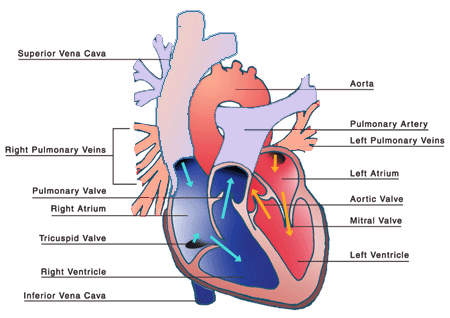
In Figure 1 below, we can see that a dog or cat’s heart has four chambers – two atria and two ventricles (one of each on each side). Blood initially enters the heart in the right atrium.  The blood then passes through the tricuspid valve into the right ventricle which pumps the blood through the pulmonic valve into the lungs to pick up oxygen (among other things).  The oxygenated blood then enters the left atrium.  Blood in the left atrium passes through the mitral valve to reach the left ventricle, which then pumps the blood through the aortic valve out to the rest of the body.  

The purpose of each of the valves (tricuspid, pulmonic, mitral, aortic) is to keep the blood flowing forward, not backward,  through the circuit described above (RA->RV-> lung > LA>LV>body).  If a valve malfunctions (e.g., it doesn’t open or close properly), it can disturb blood flowing through it enough to create turbulence and the result is that your veterinarian will hear a murmur.  The most common murmurs in dogs are associated with leaky mitral valves.


In other cases, the turbulence develops because there is a “hole in the heart” between two chambers or two arteries that are not normally connected.

Another cause is a narrowing (stenosis) within a chamber or vessel through which the blood has to “squeeze” through, like water through a pinched hose.

Finally, turbulence can be heard when the blood is too “thin” (anemia) or even when a patient is very excited causing the heart to pump faster and harder than normal.

What is a benign or “innocent” murmur?

Some heart murmurs are called benign (or innocent or physiological), meaning there is no apparent heart disease that explains the murmur.  These murmurs are often seen in puppies, and can occur in cats of any age.  They are uncommon in adult dogs.  Benign murmurs are usually soft (rather than loud), and can be intermittent.  Benign puppy murmurs will generally disappear by 12 to 15 weeks of age.  Murmurs associated with anemia or  excitement are also considered benign murmurs.

What is a congenital murmur vs. an acquired murmur?

A congenital murmur is a murmur in a pet that is present from birth (or near birth).  Congenital murmurs are associated with heart defects that the pet was born with.  However, some congenital murmurs may be missed in puppies or kittens and only detected later in life. 

An acquired murmur is a murmur that a pet acquires during their life.  These can be benign, but more often (especially in dogs) are associated with developing heart or valve disease.

My pet’s murmur has a “grade.”  What does this mean?

Murmur grading is simply your veterinarian’s way of describing the loudness of a murmur.  There are six murmur grades.  The lower the grade, the quieter the murmur.  However, it is often easiest to simply describe them as “soft,” “moderately,” or “loud.”  There are other terms that a vet will use to describe the character of a murmur – this helps communicate to other veterinarians the characteristics of the murmur as certain types of murmurs are more common associated with specific heart or valve diseases. 

The grade or loudness of the murmur is only sometimes related to the severity of the heart abnormality causing it.

Bear in mind that grading is subjective because it is based on how it sounds to the listener. Also, it’s hard to tell if an animal has a heart murmur if the pet is excited or anxious because rapid breathing sounds can mimic a murmur. Usually, only a trained cardiologist can identify a Grade 1 murmur.  A Grade 5 or Grade 6 murmur is so strong that it can be felt through the chest wall (like water being sprayed against a sheet of cloth).

What should I do if my pet has a murmur?

Dogs
In many cases, a veterinarian will be able to determine the likely cause of a murmur in a dog just by listening.  In some cases, no additional testing will be deemed necessary.  However, to be certain, it is often best to work with your veterinarian to confirm the cause of the murmur as well as the severity of the condition that is causing the murmur.  This will give you the best idea of what to expect in the future -- the prognosis for your pet.  In other cases, where a pet may be used for breeding, a murmur may indicate the presence of a hereditary defect that could be passed on to progeny.

Cats
The cause of a cat’s murmur cannot usually be determined by listening alone.  In many cats, benign murmurs can sound exactly like murmurs in a cat with serious heart disease.

In both dogs and cats, your veterinarian may elect to perform chest radiographs (x-rays), an echocardiogram (ultrasound of the heart), or other imaging studies, or to refer your pet to a specialist for these procedures.  The tests that are performed depend on the individual case.

How is a murmur treated?

The murmur itself is not treated.  The underlying cause of the murmur may or may not be treated – this depends on the cause, severity, and other circumstances (age, well-being of the pet, cost of treatment etc).  Your veterinarian is best suited to discuss specific treatment options with you.

Date Published: 1/29/2007 11:28:00 AM


Last updated - Saturday, November 14, 2009 01:05:34 PM -0500

This site designed and maintained by Dyan Merkel of
DLM DESIGN STUDIO
Copyright ©2005

RESOURCES - SITEMAP