COURAGE - CHARACTER - PREDICTABILITY
“Germany’s
Finest in America”
Importers & Breeders of the finest quality Schutzhund
titled & Breed Surveyed German Shepherds in the United
States.
214-287-8080 HausMerkel@Yahoo.com
We are located
North of Dallas in Texas
Last
updated -
Saturday, August 21, 2010 05:22:59 PM -0400
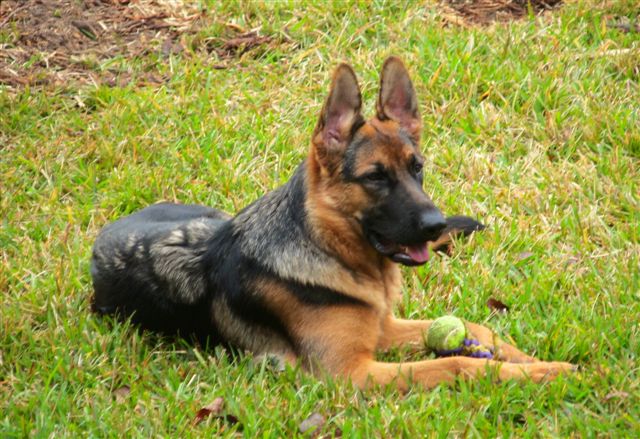
After a long
lesson in paying attention
a nap is in order'
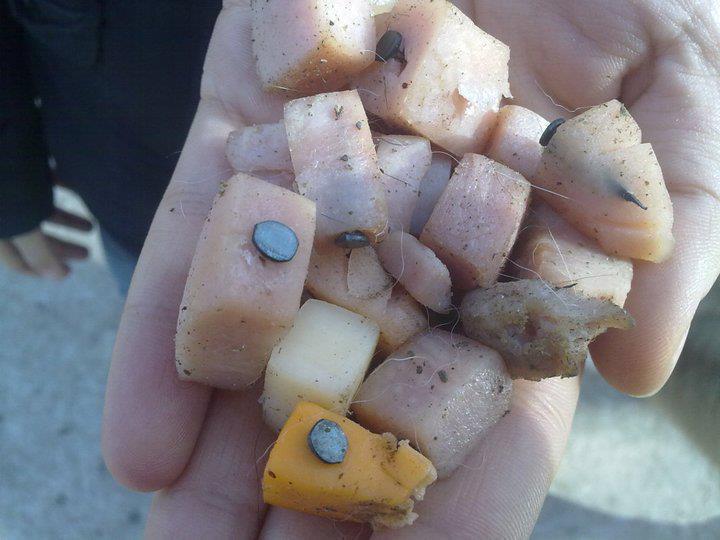
Are Bones good for your
dog?
Bottom
Line...no! Bones are not good for your dog. Dogs may
ingest splinters from bones that can lodge in their mouths
or around their teeth or worse yet bone chips can get caught
in the intestines and cause an obstruction, internal
bleeding and impaction.
One bone can cost several hundred dollars up
to thousands of dollars for surgery if your dog is the
unlucky one. Even when surgery is done your pet may
die. So why take the chance?
The best 'bones' on the market are the
Nylabonesฎ. Just make sure that you get the
appropriate size for the size of your dog. These bones
are relatively indestructible and are often flavored.
Your dog will get hours, days, and years from one of these
chew bones.
Nylabonesฎ are the only bones we allow our
dogs to have.
The Importance of Puppy Socialization
From the very start, a puppy learns important lessons through his experience
of
the world around him. Even in the first few weeks as he snuggles with his
dam, wrestles with his littermates, and is handled by his breeder each day,
the personality traits and social skills that he will have all his life are
beginning to form.
As the weeks go by, exposure to a variety of experiences is crucial to his
becoming a well-rounded adult. Studies have shown that a puppy's experiences
in the first three months of life strongly influence what kind of companion
he will grow to be and how he will react to the world. Will he shy away from
children? Will he be afraid of people in hats? Will he be aggressive toward
other dogs? Or will he be easygoing and adaptable in a variety of
situations?
READ
MORE...
"The man who rears a
dog must complete what the breeder began..." Max v. Stephanitz; Father of
the German Shepherd Dog
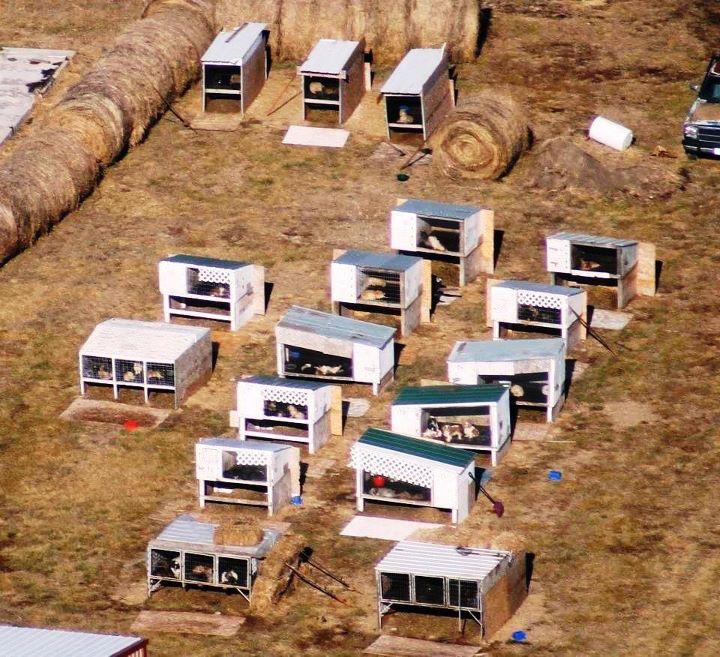
Dealing Dogs
Documentary An animal rights outfit, Last Chance for
Animals, outraged that 42,000 dogs are sold to vet schools
and research labs by vile kennel keepers, sets out on one of
the most notorious: Martin Creek Kennel in Arkansas. It sent
in investigator "Pete" with a hidden camera for six months.
He worked for the owners and collected his sickening images
and commentated on the atrocities as he went. Many of
the dogs that ended up at this kennel had been stolen from
their
backyards and sold.Not just
from Arkansas but in areas around St. Louis Mo and all
throughout the south.
How to encourage Your Dog to Drink if he is not Feeling
Well.
Proper hydration is crucial in the healing process;
however, the ill or painful dog may not be interested in
drinking. It is important NOT to force water into your
dog, as it could lead to aspiration pneumonia if your
dog is not swallowing appropriately. Listed below
are several options to encourage your dog to intake
water.
1. Give your dog an ice
cube to lick. 2. Allow your dog to lick
water from your hand or your finger. 3. Feed canned dog food, as
it has a higher water content. 4. Add warm water or
low-sodium broth to your dog's food. 5. With your veterinarian's
permission, offer small amounts of Pedialyte. 6. Adding an ice cube to
the water bowl can encourage some dogs to drink.
If your dog is weak and not interested in food or water,
see your veterinarian.
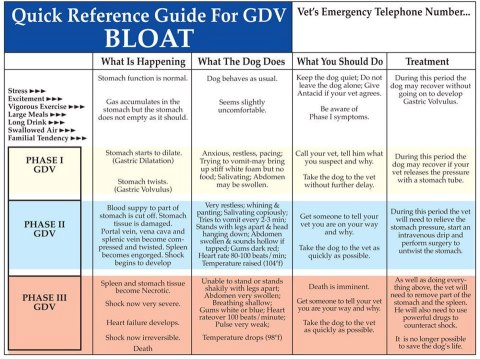
BLOAT
This is a real
combination of symptoms that spells out EMERGENCY. These are the classic
symptoms of a condition referred to as "bloat" - a dog that is pacing,
restless and has unproductive attempts to vomit.
This is a common problem in large breed
deep-chested dogs but can also occur in smaller dogs.
Basically what happens is this - the
stomach twists causing the blood supply to the stomach to be compromised
then leads to tissue death. As tissues are damaged, toxins are released
and a sequence of events occurs that if left untreated, leads to death.
If you ever notice these symptoms in
your dog, call your local veterinarian or emergency clinic as soon as
possible.
This is a condition that is fairly
common and often occurs in the evening or nighttime hours. It is also a
very expensive condition to treat.
READ MORE...
GOT FLEAS?
Place a white baking dish half full of water with a
couple drops of Lemon Joy dishwashing liquid in the center of the room
with a small lamp next to it. Turn off all other lights and go to
bed. When you wake up in the morning all the fleas will be in the
baking dish! For a bad infestation treat each room twice.
Dealing with Excessive Barking
The first step to stopping barking is to understand why it is
happening. Dogs bark for all kinds of reasons, including
anxiety, boredom and/or loneliness. Sometimes they bark just
because it feels good. Luckily, most dogs will respond to
one or other intervention to curtail their barking. Whether you
simply bring an outdoor dog inside or take the time to apply
behavior-modification techniques, you can cause a dog to be less
of a nuisance and to be more socially acceptable.
Removing Skunk Odor
No need for the tomato juice. Use a mixture of 10 parts hydrogen
peroxide to 1 part baking soda. Add a dash of degreasing
dishwashing soap and pour into a spray bottle. Spray liberally
over dry coat and allow to air dry. Avoid eyes. Works on other
objects, too!
"If any breed of dog is most deserving of the title Noble with
Natural Beauty then that dog is the German Shepherd"
No one breed of dog is for everyone, but there is one breed
that could be for just about anyone. It's known for its beauty and its
brains; its strength and its gentleness. It's a helper to the disabled,
a guardian of homes, a companion to children, a protector of livestock,
and a partner in crime-fighting. There is little this dog cannot do, and
almost nothing it's not willing to try. It's the multi-purpose, multi-tasking,
ever-popular, hard-working German Shepherd Dog.
Great
Stock Dogs
The development of today's German Shepherd Dog, or GSD, began in 1899,
when Rittmeister von Stephanitz discovered Hektor, a sheep-herding dog
who seemed to be an outstanding example of the ancient herding breeds
native to northern Germany. Renamed Horand von Grafrath, the dog became
the first dog to be officially registered with the newly-formed Verein
fur Deutsche Schaferhunde, the German Shepherd Dog Club of Germany, and
was the foundation for all GSDs to follow. GSDs came to America soon after,
and were recognized by the American Kennel Club in 1911.
GSDs
have many qualities that make them well-suited to working with livestock:
physical and mental endurance, agility, alertness, courage, and a great
willingness to serve. GSDs still work on farms and ranches throughout
the world, but these abilities, and others, make them prime candidates
for other canine "jobs," which they perform with equal dedication
and skill.
Genuine
Schutzhund Dogs
The innate talents and abilities of German Shepherd Dogs are brought out
in impressive form through Schutzhund training. "Schutzhund"
is a German word meaning "protection dog." Schutzhund-trained
dogs are not attack dogs; they are trained to ward off dangerous situations,
not provoke them. The most important quality of a Schutzhund dog is complete
submission to its owner's commands in any situation.
Schutzhund
training has three parts: Tracking, Obedience, and Protection. The Tracking
portion tests a dog's trainability, ability to follow a scent, and mental
and physical endurance. In the Obedience portion, dogs perform a variety
of exercises such as heeling, sitting, retrieving, and remaining steady
during distractions. The Protection portion tests the dog's courage, strength,
and agility by requiring the dog to find a hidden person and defend its
owner against a decoy aggressor.
Schutzhund
training and trials take place around the world. In some countries, proven
working abilities are required for GSDs to attain their championships.
Schutzhund dogs are excellent candidates for canine law enforcement and
search and rescue work. Although Schutzhund training is for all breeds,
GSDs particularly excel due to their intelligence, their bravery, and
their desire to please their masters.
Gentle
Service Dogs
After World War I, a kennel in Pottsdam, Germany, began a program to train
German Shepherd Dogs to assist veterans blinded in combat. The program
was short-lived, but an American living in Switzerland, Dorothy Harrison
Eustis, adopted the idea and began her own training program. Soon after,
Buddy, a female German Shepherd Dog, became the first Seeing Eye dog in
America. She was the helpmeet and companion of Morris Frank, who then
established a guide dog school in Nashville, Tennessee, in 1929. Since
that day, GSDs have been the "eyes" for thousands of people
around the world.
The
success of the guide dog program led to the training of GSDs--and other
breeds--as service dogs to people with hearing impairment and other physical
disabilities. The German Shepherd Dog is an ideal service dog due to its
ready obedience to commands, its ability to ignore distractions, its protective
instincts, and its unswavering loyalty to its owner.
Gifted
Security Dogs
German Shepherd Dogs have a long history of working with law enforcement
officers. Their tasks are numerous: accompanying officers on patrol (and
thereby deterring crime), pursuing criminals, recovering evidence, and
detecting drugs, explosives, and other contraband. GSDs also serve as
Search and Rescue dogs, and have been commended for their work in recovering
victims of natural disasters such as hurricanes and earthquakes, and of
national tragedies such as the Oklahoma City bombing and the terrorist
attacks of September 11, 2001.
Dogs
working in law enforcement have to have excellent noses and physical stamina;
they have to respond quickly to their handler's orders while still using
their own judgement. They must be relied upon to perform their duties
without displaying aggression to children, other officers, or innocent
persons in crowds. More importantly, they must possess the "heart"
to consistently follow commands day after day, often in difficult, demanding
environments. The GSD's innate courage and mental acumen make him eminently
capable for this type of work.
Gorgeous
Show Dogs
Although developed as a working dog, the German Shepherd Dog is lovely
to look at. Some of its notable physical characteristics are its erect
ears, its deep, dark eyes, its long saber tail (meaning that it hangs
in a slight curve), and its rich color, most often black and tan, sable,
or black. A quality GSD should be strong, agile, and well-muscled, and
should appear to "glide" when in motion, as though its feet
barely touch the ground.
Last updated -
Sunday, November 01, 2009 04:24:55 PM -0500
This site
designed and maintained by Dyan Merkel of
DLM DESIGN STUDIO Copyright ฉ2005