|
Feeding Instructions
Feeding
Practices
Until your pup is 3 to 3.5 months old, he should receive three meals
a day. Thereafter, and throughout his adult life, he should be fed
twice daily. Adult dogs fed twice daily appear to assimilate their
food more efficiently and are less likely to be subject to gastric
torsion and digestive upsets. Remember that the growing pup may
need to eat twice as much as an adult dog. Adjust the diet so that
the dog does not become too heavy and is maintained in lean hard
condition. Many people find that some dogs maintain ideal weight
and condition on a self-feeding program (of dry kibble). Never
allow your dog to exercise immediately before or after eating. He
should have water available at all times, but should not be permitted to
drink excessively before or after eating or exercise. Unless the
dog is on a self-feeding program, discourage finicky eating habits by
feeding him not more than he will eat within a few minutes.
Remember that, when in a new home, the dog may take a few day to adapt
and may miss an occasional meal.
B.
Basic Diets
IA top quality kibble, which may be somewhat moistened
for the youngster, is a completely balanced diet.
The addition of meat or canned dog food will not
interfear with the balance of the kibble providing
the addition is just a small amount. Make it a
rely to feed the best kibble available.
Usually these top fees cannot be purchased at your
local grocer but must be obtained at pet shops,
specialty feed shops, or through kennel/breeder
distributors
We
find that Iam's/Eukanuba most adequately meet the
needs of our dogs. These diets are GROWTH,
MAINTENANCE. Both German Shepherd pups and
adults thrive on the GROWTH 'Smart Puppy" diet.
Some adults having higher caloric needs may require
the addition of the other Iam's/Eukanuba specialty
foods for a low bulk, high density, high energy
diet.
Other quality kibbles are Science Diet, Nutro etc. We suggest
avaiding the soft-moist foods as they contain considerable sucrose or
other sugars that may cause digestive upsets. Finally, do not be
missled by teh percentage of protein in a food. It is the quality
and digestibility of the protein that counts. A feed that is
readdily digested and easily utilized results in a small fecal volumn.
C. Dietary Supplements
Unless a deficiency has been clinically determined or
unless the dog is on antibiotic therapy multi-vitamin and mineral
supplements are not needed. Such additives, when combined with
calcium/phosphorus supplements (especially those containing vitamins A
and D, may cause severe and irreversible growth anomalies. For
this reason, it is wise to feed a feed specifically designed for puppies
and young dogs during periods of early maturation.
The only vitamins which may be feely administered
without fear or overdose (hypervitaminosis) are: C, E, and those of the
B complex family. These vitamins are particularly helpful during
times of stress or illness.
Coat supplements with vitamins A and D are to be
avoided. However a coat supplement such as Gro-Kote (consisting
primarily of lecithin and unsaturated fatty acids) may be beneficial for
housepets and dogs with drier skin. A second choice would be the
addition of a vegetable cooking oil. Even in the best quality
kibbles, oils may be destroyed during lengthy periods of storage.
A.
Diarrhea
Many puppies and adults will often suffer a loose stool when there is a
change in diet or water. The condition can usually be corrected by
limiting fluid intake temporarily, perhaps resorting to a 24 hour fast,
followed by the feeding of lean boiled hamburger with cooked rice,
before gradually resuming the dogs regular diet. Pepto-Bismol
tablets or Kaopectate may be helpful. Sources of lactobacillus
acidophilus such as buttermilk, yogurt, Lactinex tablets or granules, or
Bacid capsules are extremely helpful in restoring healthy intestinal
flora (especially in conjunction with and following antibiotic therapy_)
along with the addition of B vitamins. If diarrhea persists for
more than a day, or is accompanied of B vitamins. If diarrhea
persists for more than a day, or is accompanied by other symptons such
as a fewer or vomiting, consult a veterinarian immediately.
B. Signs of
Illness
When calling your vet,
you should be able to advise him of any changes in the dog's eating and
drinking habits, the condition of the dog's stool (diarrhea, change in
color, blood, or mucous), color of his urine (and presence of blood or
precipitate), frequency of urination k difficulty in urinating, any
increase or decrease in volumn or urine, it the dogs' tonsils are
inflamed, and also the dog's temperature.
Normal temperature is abut 101.2
degrees. To determine your dog's normal temperature, take it for
about three minutes with a well lubricated rectal thermometer with he is
well (not first thing in the morning or after exertion). Then when
you suspect illness, you will be able to determine if the temperature is
abnormal.
To examine your dog's tonsils as well
as to administer pills and capsules), open his mouth by placing one hand
over the muzzle and by lightly pressing his upper lips against his upper
teeth. With your other hand depress; the dogs tongue and look into
his throat on either side. The tonsils are located in crypts
toward the back of the throat other either side. They appear red
with infected.
Should you have any difficulty taking
your dog's temperature or checking tonsils, you breeder or veterinarian
will advise you.
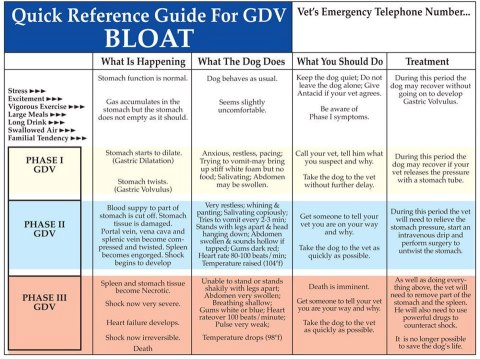
If you dog show any tendency toward
abdominal distension or bloating, he (like my large, deep chested
breeds) may be predisposed to acute gastric dilation or gastric torsion
(which may be fatal without immediate surgery). Discuss the
situation with your dog's vet if you observe any tendency toward
bloating.
|