German Shepherds                                                                                                German Shepherd Puppies


COURAGE - CHARACTER - COMMITMENT
Germany’s Finest in America
We are located North of Dallas, Texas
214-287-8080
HausMerkel@Yahoo.com

Last updated - Friday, January 29, 2010 09:34:50 PM -0500

HAUS MERKEL BLOG

Home
About Us

German Shepherd Puppies for Sale •

Older Puppies for Sale •


Our German Shepherd Males

Our German Shepherd Females •
Males for Sale

Females for Sale

Our German Shepherd Stud Dogs
Breeding Requirements for Stud

German Shepherd Rescues •
Memorials
Articles
OFA  •
Classifieds
 
More Links:
 
HEALTH ARTICLES:
MORE ARTICLES:
Other Links
Links
Contact
Add your Link
 
Members of           
GSDCA

WDA

Schutzhund USA

SV-Germany
 

The Importance of Puppy Socialization
From the very start, a puppy learns important lessons through his experience of the world around him. Even in the first few weeks as he snuggles with his dam, wrestles with his littermates, and is handled by his breeder each day, the personality traits and social skills that he will have all his life are beginning to form.

As the weeks go by, exposure to a variety of experiences is crucial to his becoming a well-rounded adult. Studies have shown that a puppy's experiences in the first three months of life strongly influence what kind of companion he will grow to be and how he will react to the world. Will he shy away from children? Will he be afraid of people in hats? Will he be aggressive toward other dogs? Or will he be easygoing and adaptable in a variety of situations?
READ MORE...

"The man who rears a dog must complete what the breeder began..." Max v. Stephanitz; Father of the German Shepherd Dog

        Dealing Dogs Documentary
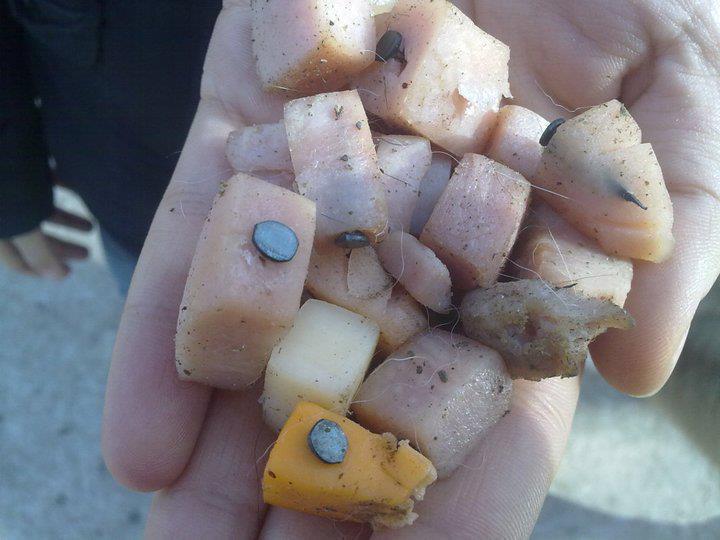
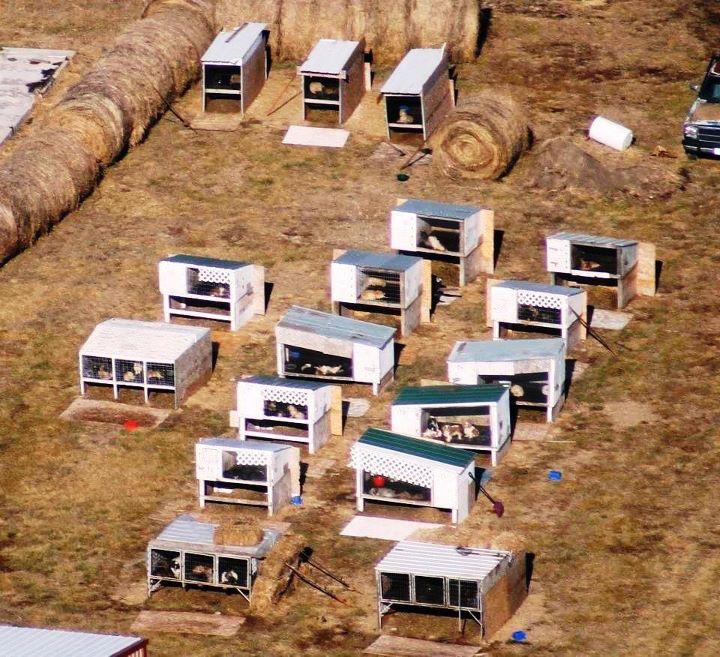
An animal rights outfit, Last Chance for Animals, outraged that 42,000 dogs are sold to vet schools and research labs by vile kennel keepers, sets out on one of the most notorious: Martin Creek Kennel in Arkansas. It sent in investigator "Pete" with a hidden camera for six months. He worked for the owners and collected his sickening images
and commentated on the atrocities as he went.  Many of the dogs that ended up at this kennel had been stolen from their
backyards and sold.


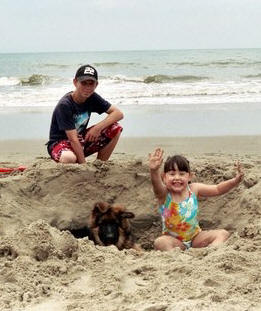
"Fun at the Beach"

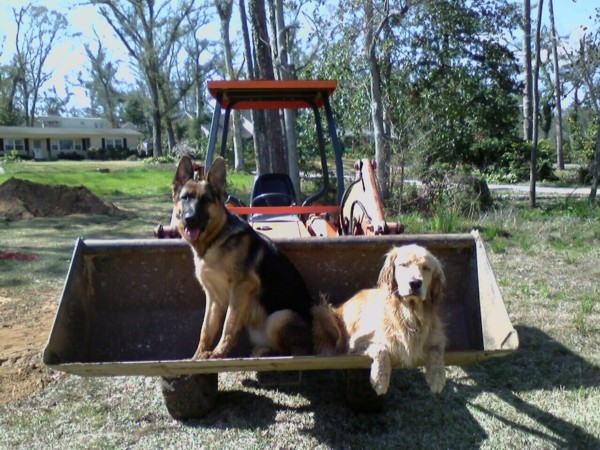
"Fun at Work"

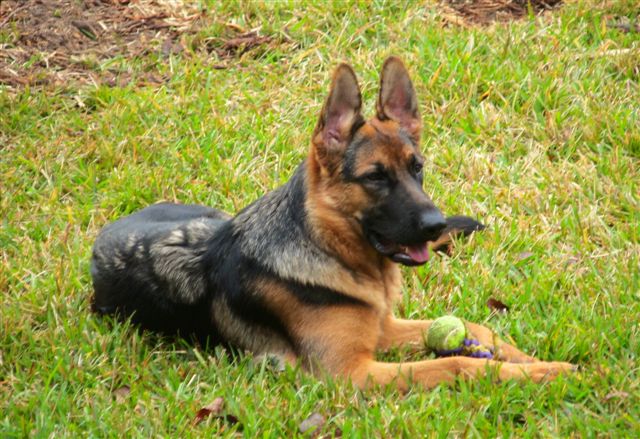
"Fun just hanging out"


How to Protect your Pet from Heat Stroke


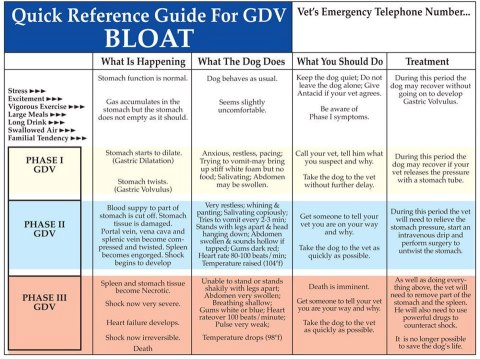
BLOAT


This is a real combination of symptoms that spells out EMERGENCY. These are the classic symptoms of a condition referred to as "bloat" - a dog that is pacing, restless and has unproductive attempts to vomit.

This is a common problem in large breed deep-chested dogs but can also occur in smaller dogs.

Basically what happens is this - the stomach twists causing the blood supply to the stomach to be compromised then leads to tissue death. As tissues are damaged, toxins are released and a sequence of events occurs that if left untreated, leads to death.

If you ever notice these symptoms in your dog, call your local veterinarian or emergency clinic as soon as possible.

This is a condition that is fairly common and often occurs in the evening or nighttime hours. It is also a very expensive condition to treat.  READ MORE...

 
            GOT FLEAS?
Place a white baking dish half full of water with a couple drops of Lemon Joy dishwashing liquid in the center of the room with a small lamp next to it.  Turn off all other lights and go to bed.  When you wake up in the morning all the fleas will be in the baking dish! For a bad infestation treat each room twice.
 

Dealing with Excessive Barking

The first step to stopping barking is to understand why it is happening. Dogs bark for all kinds of reasons, including anxiety, boredom and/or loneliness. Sometimes they bark just because it feels good.  Luckily, most dogs will respond to one or other intervention to curtail their barking. Whether you simply bring an outdoor dog inside or take the time to apply behavior-modification techniques, you can cause a dog to be less of a nuisance and to be more socially acceptable.


Removing Skunk Odor

No need for the tomato juice. Use a mixture of 10 parts hydrogen peroxide to 1 part baking soda. Add a dash of degreasing dishwashing soap and pour into a spray bottle. Spray liberally over dry coat and allow to air dry. Avoid eyes. Works on other objects, too!


Site designed and maintained by
Dlm Design Studio

Copyright © 2001 [Haus Merkel]. All rights reserved.
Revised: 01/29/10.

Add Me! - Search Engine Optimization


MEGA ESOPHAGUS, TREATMENT and MANAGEMENT
 
What is Mega Esophagus?

The esophagus is the tube connecting the throat to the stomach.  When food is perceived in the esophagus, neurologic reflex causing muscle contraction and relaxation lead to rapid transport of the food into the stomach, like an elevator going down. Other reflexes prevent breathing during this swallowing process to protect the lungs from aspiration.

When these reflexes are interrupted such as by disease in the esophageal tissue or nerve disease, the esophagus loses its ability to transport food.  Instead the esophagus loses all tone and dilates.  Also, the reflex protecting the lung is disrupted and aspiration pneumonia commonly follows.

Most cases involve young puppies (Great Danes, Irish setters, Austrailian Cattle Dogs, Golden Retreivers and German Shepherds are genetically predisposed).  In these cases the condition is believed congenital though it often does not show up until the pup begins to try solid food. Congenital megaesophagus is believed to occur due to incomplete nerve development in the esophagus. The good news is that nerve development may improve as the pet matures.  Prognosis is thus better for congenital megaesophagus than it is for megaesophagus acquired during adulthood.

The above condition is treatable.  Treatment takes dedication, love and hard work.

The Diagnostic Plan

First, the megaesophagus must be diagnosed.  This is done radiographically.  If megaesophagus is not obvious on plain films, it is better not to use contrast (Barium) studies if possible. This is because megaesophagus patients have the tendency to inhale or "aspirate" food contents that back up in their throats.  This is dangerous enough when the material is simply food but if barium is present and becomes inhaled, the body has great difficulty removing it from the lungs. Still, sometimes this is the only way to see the megaesophagus.

Treatment

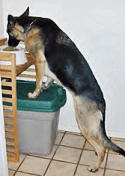
This puppy needs to be on a liquid diet consisting of ground kibble and lots of water fed before it sets up.  Feed the dog in an elevated position. Ideally, the pet should be kept in this position for 10-15 minutes after the meal. 

Vomiting versus Regurgitation

Most people do not realize that there is a difference between these two actions. Vomiting is an active process. There is gagging, heaving, and retching as the body actively expels stomach contents.  Regurgitation is passive. For whatever reason, food is swallowed from the mouth but never really goes anywhere beyond that point.  Food sits in the esophagus until it simply falls back out the mouth at some point.  In the dog, megaesophagus is the most common cause of regurgitation.

FEEDING

Feed Iams puppy food ground up in the blender - 1/2 cup ground kibble mixed with warm water and given immediately.

Feed frequently. Small meals (1/2 cup ground kibble with warm water in a 1 quart food pan with at least an inch of water) fed as close as every 3 hours  .    Very few dogs diagnosed with Megaesophagus will manage well with two meals per day.   5 feedings is what a puppy should get daily and will need to be maintained this way throughout its life.  Kibble given in plenty of water may satisfy most of the water requirement to stay hydrated, but always have fresh water available.

Feed as small volume as possible per meal, based on the highest number of feedings that can be achieved for that day. (Add: the importance of resting the digestive system).  If you put this dog on normal full kibble feedings at anytime it will enlarge the esophagus  so much that it will fill up the lung area and the dog can die from aspiration pneumonia.

Feeding your dog in an upright position is helpful. Dependent upon severity of the main symptom markers (1) regurgitation, (2) ability to gain weight, (3) ability to maintain weight, the upright position should be:

Minimally 45 degrees. This is known as elevated feeding, whereby your dog's head and neck are well above the stomach region.  This method may work well enough for some.

Maintain the vertical upright feeding position after the last swallow to further increase digestive potential.   Having your dog remain in a supine, near vertical position after the meal (ex: 5-10min., 15-20 being better) is also very helpful. The digestion process is far from over after that last swallow!  Holding this position longer will allow gravity to further improve the digestion miracle you are trying to achieve.  Vertical feeding will work best for the majority!   "Vertical" indicates that the dog's spine is 90 degrees or nearly straight up.

To increase calorie intake you can use the following:

Stat
Ensure
Nutri-Cal
Vitacal
Nutristat

Do not give any bones or rawhide to a dog with mega esophagus as they tend to ingest parts of these items.  This can cause severe vomiting and injury to an already flacid esophagus.

Hotdogs & Cheese cut into pellet sized pieces are fine training aids and can be used for an occasional treat.  Do not give too many at one time.


Last updated - Monday, February 02, 2009 09:38:53 PM -0500

This site designed and maintained by Dyan Merkel of
DLM DESIGN STUDIO
Copyright ©2005

RESOURCES - SITEMAP

Last updated - Monday, February 02, 2009 09:38:53 PM -0500

This site designed an